Feed Your Eyes: The Essential Nutrients for Lifelong Vision

Your eyes are one of the most complex organs in your body — and like every organ, they thrive on the right fuel. Most people think eye care means getting a prescription or limiting screen time. But what you eat plays an equally powerful role in protecting your vision, slowing age-related decline, and keeping your eyes comfortable every single day. Here are the most important nutrients for eye health and exactly where to find them.
Beta-Carotene & Vitamin A — The Night Vision Nutrient
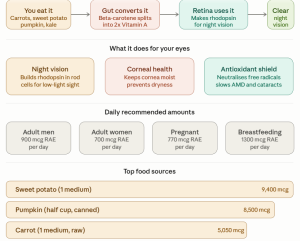
Beta-carotene is the pigment that gives carrots, sweet potatoes, and mangoes their vivid orange colour. Your body converts it into Vitamin A, which is essential for producing rhodopsin — a pigment in your retina that allows you to see in low-light conditions. Without enough Vitamin A, night blindness can develop, and in severe cases, the cornea can begin to deteriorate. Beyond vision, Vitamin A keeps the surface of your eye moist and healthy, acting as a protective barrier against infections. Include carrots, sweet potato, pumpkin, papaya, and dark leafy greens in your meals regularly to keep your Vitamin A levels steady.
Lutein & Zeaxanthin — The Macula’s Bodyguards
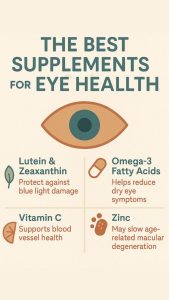
These two carotenoids are found in high concentrations in the macula — the central part of your retina responsible for sharp, detailed vision. Think of lutein and zeaxanthin as natural sunglasses built right into your eye. They filter harmful high-energy blue light and neutralise free radicals before they can damage delicate retinal cells. Research, including the landmark AREDS2 study, has shown that diets rich in these nutrients significantly reduce the risk of age-related macular degeneration (AMD) — one of the leading causes of vision loss in adults over 50. The best sources are spinach, kale, egg yolks, broccoli, and corn. Cooking spinach lightly actually increases the bioavailability of lutein, so a quick sauté is more effective than eating it raw.
Omega-3 Fatty Acids — Structural Support for the Retina
The retina is unusually rich in a type of omega-3 fat called DHA (docosahexaenoic acid). DHA is a core building block of retinal cell membranes, helping them function and communicate effectively. Omega-3s also reduce inflammation throughout the body, which is closely linked to dry eye disease — a condition where the eyes don’t produce enough quality tears, causing irritation, blurry vision, and discomfort. Studies consistently show that people who consume more omega-3s have a significantly lower risk of chronic dry eye. Fatty fish like salmon, mackerel, and sardines are the richest sources. For plant-based options, flaxseeds, chia seeds, hemp seeds, and walnuts provide ALA, which the body can partially convert to DHA.
Vitamin C — The Antioxidant Shield
Your eyes are highly exposed to light and oxygen — two things that generate oxidative stress and free radical damage. Vitamin C is one of the most powerful antioxidants your body uses to combat this. It’s found in very high concentrations in the lens of the eye, where it helps slow the formation of cataracts — the clouding of the lens that causes blurry vision, often requiring surgery later in life. Research suggests that people with higher Vitamin C intake have a substantially lower risk of developing cataracts. Bell peppers (especially red ones) are surprisingly the richest source of Vitamin C — even more than oranges. Other great options include strawberries, guava, kiwi, and amla (Indian gooseberry), which is exceptionally potent.
Vitamin E — The Cell Membrane Protector
Vitamin E works synergistically with Vitamin C to provide layered antioxidant defence. It’s fat-soluble, meaning it integrates into the fatty cell membranes of eye tissues and protects them from oxidative damage. Combined with other nutrients in the AREDS2 formula, Vitamin E has been shown to slow the progression of intermediate AMD. It also supports healthy blood vessel function in and around the eye. Almonds, sunflower seeds, hazelnuts, avocado, and extra virgin olive oil are all excellent sources. Because Vitamin E is fat-soluble, pairing it with a healthy fat source ensures proper absorption.
Zinc — The Delivery System
Zinc might be the most underrated eye nutrient. It plays a critical role in transporting Vitamin A from your liver to your retina, where it’s used to produce melanin — a pigment that protects the eyes from UV damage. The retina and choroid (the vascular layer behind the retina) contain some of the highest zinc concentrations in the entire body. Low zinc levels have been associated with poor night vision and an increased risk of AMD. Oysters are by far the richest food source of zinc, but chickpeas, pumpkin seeds, beef, and cashews are also excellent options, especially for those following a plant-based diet.
Putting It All Together
You don’t need to overhaul your entire diet to protect your eyes. A few simple habits make a big difference: add a handful of spinach to your meals, snack on almonds, include fatty fish twice a week, and pile your plate with colourful fruits and vegetables. One important tip — since many eye-protective nutrients like lutein, Vitamin E, and beta-carotene are fat-soluble, eating them with a source of healthy fat (like olive oil, avocado, or nuts) dramatically improves absorption.
Your eyes work hard every waking moment. Give them the nutrition they deserve — and they’ll reward you with clear, comfortable vision for decades to come.
The beauty of eye nutrition is that it doesn’t require expensive supplements or complicated meal plans. Nature has already packed everything your eyes need into whole, colourful, delicious foods that are available in every market and kitchen. A handful of spinach here, a roasted sweet potato there, a piece of salmon twice a week — these small, consistent choices quietly build a powerful shield around your vision over months and years. The damage that leads to cataracts, macular degeneration, and night blindness doesn’t happen overnight, and neither does the protection against it. Every meal is either an investment in your eyesight or a missed opportunity. The good news is that it is never too late to start. Whether you are in your twenties building a foundation for lifelong vision, or in your fifties looking to slow age-related decline, the nutrients covered in this article work at every stage of life. So the next time you fill your plate, think of it as more than just a meal — think of it as medicine for your eyes. Eat the rainbow, embrace the fats, and let food be your first line of defence for a lifetime of clear, vibrant vision.