The Nepali Optometrist

Your Stress Is Literally Blinding You — Here Is the Proof

Stress and Eyesight — How Chronic Stress Is Silently Affecting Your Vision

You know that stress gives you headaches. You know it disrupts your sleep and tightens your shoulders. But did you know that stress and eyesight are far more connected than most people ever realise? Chronic stress — the kind that lingers for weeks or months — can silently damage your vision in ways that are easy to miss until the problem becomes serious. If your eyes have been feeling tired, blurry, twitchy, or strained lately, stress might be the hidden culprit behind it all.


How Stress and Eyesight Are Connected

When your body experiences stress, it triggers the well-known fight-or-flight response. Your brain sends a surge of stress hormones — primarily cortisol and adrenaline — rushing through your body. Your heart rate increases, your muscles tighten, and your pupils dilate to let in more light so you can react quickly to perceived danger.

This response is perfectly healthy in short bursts. The problem begins when stress becomes chronic. When your body stays in this heightened state for days, weeks, or months, every system in your body pays a price — including your eyes. The relationship between stress and eyesight is real, scientifically documented, and more serious than most people give it credit for.


7 Ways Stress Directly Affects Your Eyesight

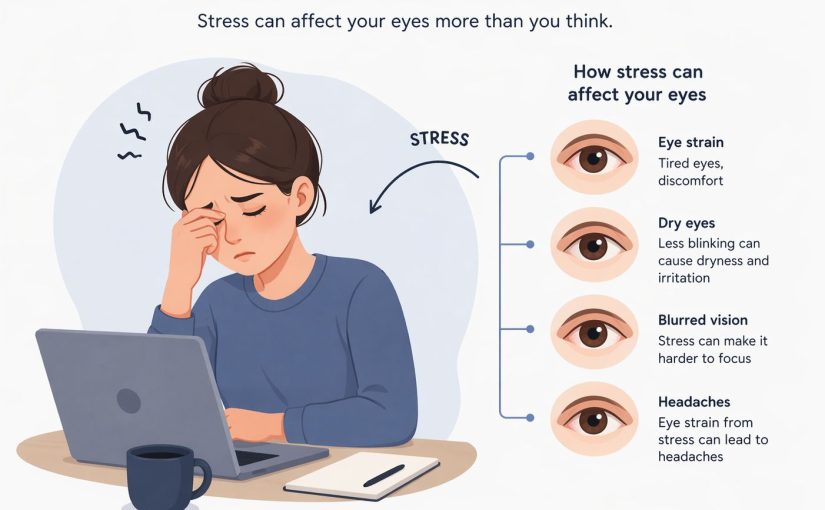
1. Blurry Vision One of the most common connections between stress and eyesight is blurry vision. When stress hormones flood your body, the tiny muscles that control your eye’s lens go into a state of tension. These muscles struggle to focus properly, causing objects to appear blurry or out of focus. Many people who experience sudden blurry vision during stressful periods assume they need a new prescription — but often the real cause is stress itself.

2. Eye Twitching Have you ever noticed your eyelid twitching uncontrollably during a particularly stressful week? This phenomenon — known medically as myokymia — is one of the most direct ways stress and eyesight interact. Stress depletes magnesium levels in the body and disrupts the nervous system, causing the delicate muscles around the eye to spasm involuntarily. While harmless in most cases, persistent eye twitching is your body’s clear signal that it is under too much pressure.

3. Eye Strain and Fatigue Stress makes you tense — and that tension extends to the muscles around your eyes. When these muscles remain contracted for long periods, eye strain sets in. Your eyes feel heavy, tired, and uncomfortable even without excessive screen use. The connection between stress and eyesight becomes especially clear here because eye strain from stress feels different from regular screen fatigue — it lingers even after rest.

4. Increased Sensitivity to Light Chronic stress keeps your pupils in a state of mild dilation. This means more light enters your eye than usual, making you more sensitive to bright lights, sunlight, and screens. Many people under chronic stress report that lights seem harsher and more uncomfortable than before — and this is a direct result of the stress and eyesight connection at work.

5. Tunnel Vision and Visual Disturbances During acute stress or anxiety attacks, some people experience a temporary narrowing of their visual field — commonly known as tunnel vision. This happens because stress hormones cause blood vessels to constrict, reducing blood flow to the peripheral areas of the retina. Visual disturbances such as flashing lights, floaters, or wavy lines can also occur during high stress periods.

6. Dry Eyes Stress disrupts the balance of your autonomic nervous system — the system that regulates automatic body functions including tear production. When this balance is thrown off, your eyes produce fewer tears, leading to dryness, irritation, and a gritty uncomfortable feeling. The link between stress and eyesight through dry eye syndrome is particularly common among people who work long hours under pressure.

7. Worsening of Existing Eye Conditions If you already have an eye condition such as glaucoma, dry eye disease, or diabetic retinopathy, chronic stress can make it significantly worse. Studies have shown that elevated cortisol levels increase intraocular pressure — the pressure inside the eye — which is a primary risk factor for glaucoma. Managing stress is therefore not just about comfort but about actively protecting your long-term vision.


The Cortisol Connection — Why Stress Hormones Are Bad for Your Eyes

Cortisol is your body’s primary stress hormone and the main bridge between stress and eyesight damage. In healthy amounts cortisol is essential — it regulates inflammation, blood sugar, and the sleep-wake cycle. But chronically elevated cortisol is destructive.

High cortisol levels over time cause oxidative stress throughout the body, including in the delicate tissues of the eye. The retina — the light-sensitive layer at the back of your eye — is particularly vulnerable to oxidative damage. This is why people who experience prolonged periods of high stress sometimes notice a gradual decline in the sharpness and clarity of their vision even without any diagnosed eye condition.


How to Protect Your Eyesight from Stress

The good news is that the connection between stress and eyesight works both ways — when you reduce stress, your eyes recover. Here are the most effective ways to protect your vision from stress-related damage.

Practice daily relaxation techniques. Even ten minutes of deep breathing, meditation, or yoga each day significantly lowers cortisol levels and relaxes the muscles around your eyes.

Follow the 20-20-20 rule. Every twenty minutes of screen time, look at something twenty feet away for twenty seconds. This simple habit releases eye muscle tension and reduces stress-related eye strain dramatically.

Eat for your eyes and your nerves. Magnesium-rich foods like spinach, almonds, and dark chocolate reduce eye twitching and calm the nervous system. Omega-3 fatty acids from fish and walnuts protect the retina from oxidative stress damage.

Prioritise quality sleep. Your eyes repair and regenerate during sleep. Chronic sleep deprivation caused by stress is one of the fastest ways to accelerate vision problems. Aim for seven to eight hours every night.

Limit caffeine and alcohol. Both substances elevate cortisol and increase eye pressure — exactly what you do not want when stress and eyesight are already at odds.

Take regular breaks from screens. Blue light from screens combined with stress is a particularly damaging combination for your eyes. Use blue light filtering glasses during long work sessions.


When to See a Doctor

While most stress-related vision symptoms are temporary and reversible, some warning signs should never be ignored. See an eye doctor immediately if you experience sudden vision loss, severe eye pain, persistent floaters or flashing lights, or double vision. These could indicate a serious condition that requires urgent attention beyond stress management.


Final Thoughts

The connection between stress and eyesight is undeniable and deeply important. Your eyes are not isolated organs — they are deeply connected to your nervous system, your hormones, and your overall wellbeing. Every time you feel overwhelmed, anxious, or burned out, your eyes feel it too. The best thing you can do for your vision is not just to eat well and visit your eye doctor regularly — it is also to slow down, breathe deeply, and give your mind and body the rest they are desperately asking for. Take care of your stress, and your eyesight will thank you for it.